
The year 2014 is coming to an end. It was the year of conflict, the year of strife. Year 2014 will be remembered for several reasons -- the rise and threat of the Islamic State, the downing of two Malayasia Airlines aircraft and the sudden and effective way of using hastags on social media to generate a buzz about the event. After all, who can forget #theicebucket challenge and the phenomenon it grew into. Read on as we bring you an overview of international news and events of 2014.

India has made a good beginning in the area of satellite navigation but still there is a long way to go.

Photos from the Wimbledon matches on Day 1

In a major breakthrough, the United Nations Security Council on Saturday voted unanimously on a resolution to destroy Syria's chemicals weapons stockpile and warned of strong action in case of non-compliance by Damascus.

'Clearly, from the Indian viewpoint, the US retrenchment from Asia cannot be happening as good news.' 'The abandonment of the US' pivot to Asia exposes the US-Indian partnership to be a mere transactional relationship,' says Ambassador M K Bhadrakumar

We have let a woman of Italian origin rule us through a clever divide of administrative power centres, but far too many of us have not accepted her Indianness. We have every right to reject her politics and her corrupt government, but shouldn't her living most of her life here make her Indian enough?

United States President Barack Obama on Saturday warned lawmakers against turning "a blind eye" to chemical attacks in Syria as he made a strong pitch to war-weary Americans for "limited" strikes in the strife-torn country.

New Delhi and Beijing are the only two regional capitals that have commented on US President Donald Trump's speech on August 21 outlining the way forward in Afghanistan. The Indian foreign ministry statement was effusive in praise, while the Chinese statement has been one of cautious and guarded hope. Delhi has identified itself with Trump's Afghan strategy, whereas the Chinese stance is calibrated -- observant and objective, keeping a distance, says Ambassador M K Bhadrakumar.

'Elected representatives have won elections in the past on the basis of money power received from the central government.' 'This fact has been highlighted by former army chief V K Singh who boasted of crores of rupees being distributed to Kashmiri politicians in order to buy their loyalty and win votes.' 'All the Kashmiri politicians have been co-opted by the Indian State,' says separatist Hurriyat leader Syed Ali Shah Geelani.

'With any luck and a certain amount of rationality, we should be able to survive,' historian Antony Beevor tells Rediff.com's Sanchari Bhattacharya. 'We should learn that genocides and elimination of minorities achieve nothing and only sets a nation back. If we don't learn from our mistakes, then humanity doesn't deserve a chance to survive.'

'Despite almost $30 billion of funding since 2001, all the US reaps today is unmitigated hostility of a Pakistan emboldened to flaunt its China card.' 'How can the US give credence to any offers from Pakistan, which has trotted out the standard alibi of non-State actors time and again, including dreaded terror outfits being out of State control, Pakistan itself being a victim and so forth?'
'Other countries go out on a limb to save even a single life.' 'What to talk of civilian accidents and disasters, even our military does not have a priority for Combat Search and Rescue,' says Group Captain P I Muralidharan (retd).

The Geneva agreement is a signal, which at least Saudi Arabia and Israel are so reading, that normalisation of relations between US and Iran is not merely about the nuclear fuel cycle, says K C Singh.

There is speculation that China released the White Paper on Tibet in a hurry after a Spanish court agreed to hear charges of genocide against former Chinese president Hu Jintao. Ajai Shukla reports

Incoming US President Donald Trump has assembled a core team that is -- not surprisingly -- overwhelmingly white and male.

'When it comes to India-Pakistan relations, seminal moments of progress invariably bring out saboteurs of peace -- whether we're talking about fresh provocations along the LoC, or even a terror attack in India.'

'The year in pictures' treks across the globe, looking back on the moments that shaped 2016. From the United States presidential race, to demonetisation in India to the refugee crisis, the news has kept pouring in. Here are our top 50 moments from the world.
As the western forces prepare to leave Afghanistan in the coming year, India stands at a crossroads where it remains keen to preserve its interests in Afghanistan but has refused to step up its role as a regional security provider. New Delhi needs to recognise that there is no short-cut to major power status, says Harsh V Pant


'Chinese leaders rarely receive their foreign guests in cities other than Beijing. Such respect for India!' 'Does it mean that Modi could replicate "the warmth and unconventional way" by sending Indian troops into Tibet, as Xi did in Chumur (Ladakh) when he arrived in India? Of course, Indians are far too polite to do so,' says Claude Arpi.
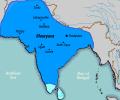
'There is a remarkable link between the eating of beef (or at the very least, tolerating the eating of beef) and India being a superpower.' 'In India, whenever an empire was strong, religion took a back seat.' 'Alternatively, whenever religion asserted itself, the main empire of India crumbled...'

In the second and final part of his column, Col Anil Athale says the fight between forces of Indian nationalism and Macaulayism aided and abetted by West is going to be long, hard and dirty. The outcome will decide whether India becomes a superpower or continues to wallow in the swamp of underdevelopment.

'Disparity is not only in Mumbai; you see it in every city. The other day, I saw right next to the mansion of Mukesh Ambani worth Rs 5,000 crore for one family, thousands of people sleeping on the pavement. This is the urban India you have created!'

With Beijing having had a profound rethink on India's admission as a full member of the Shanghai Cooperation Organisation, the tectonic plates of the geopolitics of a massive swathe of the planet stretching from the Asia-Pacific to West Asia are dramatically shifting. That grating noise in the Central Asian steppes will be heard far and wide -- as far as North America, says Ambassador M K Bhadrakumar.
 © 2026 Rediff.com - Advertise with us - Disclaimer - Privacy Policy - Sitemap - Feedback - About us - Terms of use - Grievances